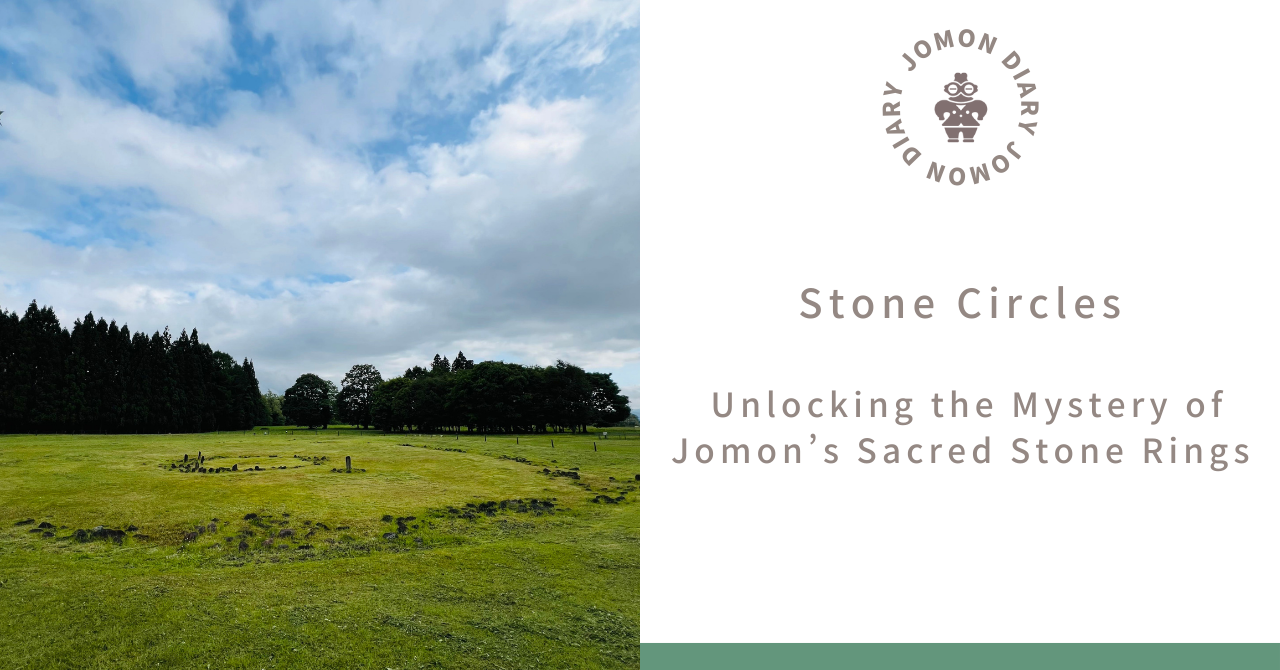
What is a Stone Circle?
A stone circle is a prehistoric monument formed by stones arranged in a ring. In Japan, these structures began appearing around the Early Jomon period and are primarily found in the Hokkaido, Tohoku, and Chubu regions.
These sites vary greatly in scale and appearance; some span dozens of meters in diameter, while others consist of hundreds or even thousands of individual stones.
While the general term for stones arranged in a specific pattern is “Stone Alignment” (Haiseki Iko), the larger-scale versions are most commonly referred to as “Stone Circles.” These grand monuments reached their peak during the Late Jomon period.
What were they used for?
Their exact purpose remains a subject of debate, but they are widely believed to have served as:
- Ritual or assembly sites for the community.
- Cemeteries for honoring the dead.
- Ancient calendars to track the movements of the sun and moon.
One of the most compelling pieces of evidence for the “calendar theory” can be found at the Oyu Stone Circles in Akita Prefecture. A line connecting the centers of the Nonakado and Manza circles, passing through their respective sun-dial-shaped stone clusters, aligns perfectly with the direction of the sunset on the summer solstice.
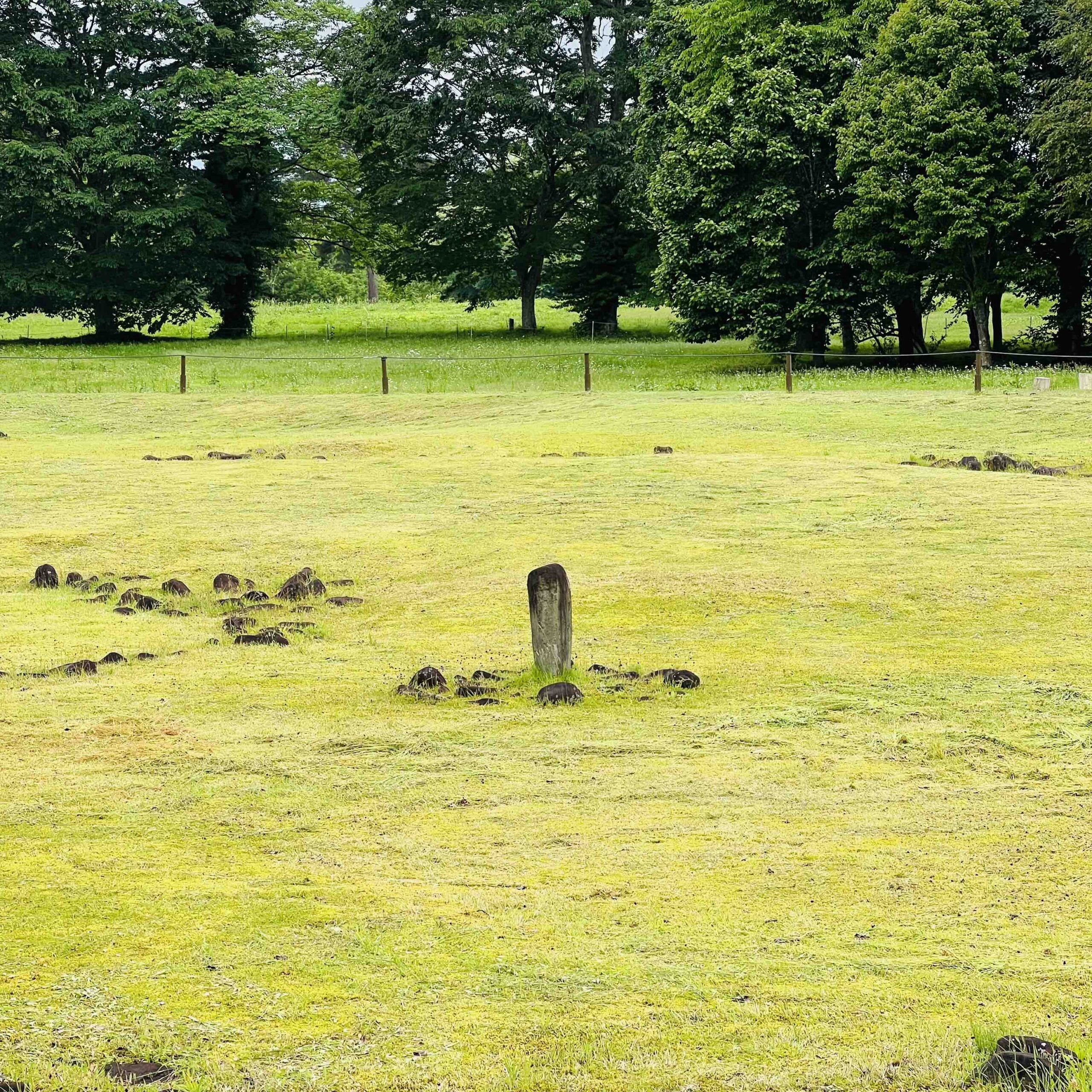
Famous Stone Circles in Japan
Let’s start by comparing the scale and unique features of Japan’s most iconic stone circles!
The Tohoku region is home to many large-scale stone circles, including several that are part of the “Jomon Prehistoric Sites in Northern Japan,” which was inscribed as a UNESCO World Heritage Site in 2021.
Komakino Stone Circle(Aomori)
The Komakino Site is a significant archaeological site from the Late Jomon period (approx. 4,000 years ago), renowned for its massive stone circle. It features a unique triple-to-quadruple ring structure with a diameter of 55 meters, making it one of the largest in Japan.
This monument is constructed from approximately 2,900 large stones. Interestingly, about 90% of these are andesite, while the remaining 10% consist of dacite.
The stones are arranged in a distinctive pattern, alternating between horizontal and vertical placements. This sophisticated technique is widely known as the “Komakino-style arrangement.”

Isedotai Stone Circles(Akita)
The Isedotai Site is a remarkable archeological site dating back to the Late Jomon period (approx. 4,000 years ago). Its most striking feature is the discovery of four large-scale stone circles clustered in one location, each boasting an impressive diameter of over 30 meters.
Approximately 4,000 stones were used to construct these monuments, gathered from the nearby Kozarube River and other surrounding areas.
Notably, these circles incorporate more than 20 different types of colorful stones. When you visit, it is fascinating to pay close attention to the diverse colors and textures of each individual stone!

Oyu Stone Circles(Akita)
秋田県鹿角市の大湯環状列石は、縄文時代後期(約4,000年前)の遺跡です。「万座」と「野中堂」という2つの巨大なストーンサークルから構成されています。
万座環状列石では約6,500個の石が使われていて、特に「石英閃緑玢岩」という緑色の石が6割を占めているのが特徴です。同じ秋田県の伊勢堂岱遺跡はカラフルな石を用いており、大湯環状列石と見比べると、それぞれの個性ある石使いの違いを楽しめます。
大湯環状列石と伊勢堂岱遺跡は車で約1時間の距離にあるため、レンタカーを利用すれば1日で両方を訪れることができます。
The Oyu Stone Circles date back to the Late Jomon period (approx. 4,000 years ago) and consist of two massive structures: the “Manza” and “Nonakado” circles.
The Manza circle alone utilizes approximately 6,500 stones. A defining feature of this site is that about 60% of these are “Quartz Diorite Porphyry,” a type of stone with a distinct greenish hue. While the Isedotai Site (also in Akita) is known for its variety of colorful stones, Oyu offers a different aesthetic with its consistent use of green stones—showing the unique “personality” and preferences of each Jomon community.
Travel Tip: The Oyu Stone Circles and the Isedotai Site are only about a one-hour drive apart. If you rent a car, it is easy to visit both of these world-class heritage sites in a single day.

Goshono Site(Iwate)
The Goshono Site is an archeological site from the latter half of the Middle Jomon period (approx. 5,000–4,200 years ago). Goshono is characterized by a high concentration of Stone Alignments (Haiseki Iko). Among the materials used, researchers have identified granite transported all the way from Mount Moya.
Numerous burial pits have been discovered surrounding these stone structures. Because of this, it is believed that these specific areas within the vast Goshono settlement served as dedicated cemeteries for the community.

Yubunezawa Stone Ciecle(Iwate)
The Yubunezawa Stone Circle dates back to the Late Jomon period (approx. 4,000 years ago). It consists of about 900 stones of various sizes, primarily made of andesite.
From a bird’s-eye view, the structure appears as a large circle. However, its layout is remarkably complex and unique; when viewed closely, individual stones are arranged in straight lines and rectangular patterns. Archaeological investigations have also revealed traces beneath these stone clusters, suggesting that the site functioned as a burial ground.

[Extra] Wood Circles and International Examples
Chikamori Site(Ishikawa)
Interestingly, not all circular monuments were made of stone. Some were built using wood. At the Chikamori Site, dating from the Late to Final Jomon period (approx. 3,000–2,300 years ago), a large “Wood Circle” made of chestnut pillars was discovered. Ten massive pillars formed a ring, with two additional pillars positioned like a ceremonial gate.

Stonehenge (United Kingdom)
A famous international example is Stonehenge in the UK. Construction began about 5,000 years ago, using massive stones transported from great distances. While the discovery of burial sites suggests it may have served as a ritual temple, much of its history remains shrouded in mystery.
Similar to Japan’s stone circles, Stonehenge is also believed to be aligned with the movements of the sun, showing a fascinating universal connection between ancient peoples and the cosmos.
Summary
- Multifaceted Roles: Stone circles are circular monuments built during the Jomon period. They are believed to have served various purposes, including ritual sites, community assembly areas, and astronomical calendars.
- Significant Sites in Tohoku: While found in several regions, the most large-scale examples are concentrated in the Tohoku region. Sites like the Komakino Site and the Oyu Stone Circles are particularly famous.
- Advanced Knowledge: The careful selection of stone types and their precise arrangement reflect the Jomon people’s sophisticated engineering skills and deep understanding of astronomy.
- A Universal Phenomenon: During the same era, circular structures were built worldwide—including Japan’s wood circles and the UK’s Stonehenge. This suggests that “the circle” held a profound and sacred meaning for ancient civilizations across the globe.
Discover More About the Jomon Period

This article may contain advertisements or sponsored content (PR).